Identify the item
Product name, brand, packaging, and batch or lot details.
Making food recall information easier to understand and act on.
Inspired by the difficulty of interpreting a Trader Joe’s recall notice, Decode explores how a mobile scan could help someone identify whether an official notice applies to a product they have, understand the evidence and uncertainty, and find the appropriate next step. A separately explored Arduino light concept extends the idea of reminders into the kitchen; the phone and device have not been connected.
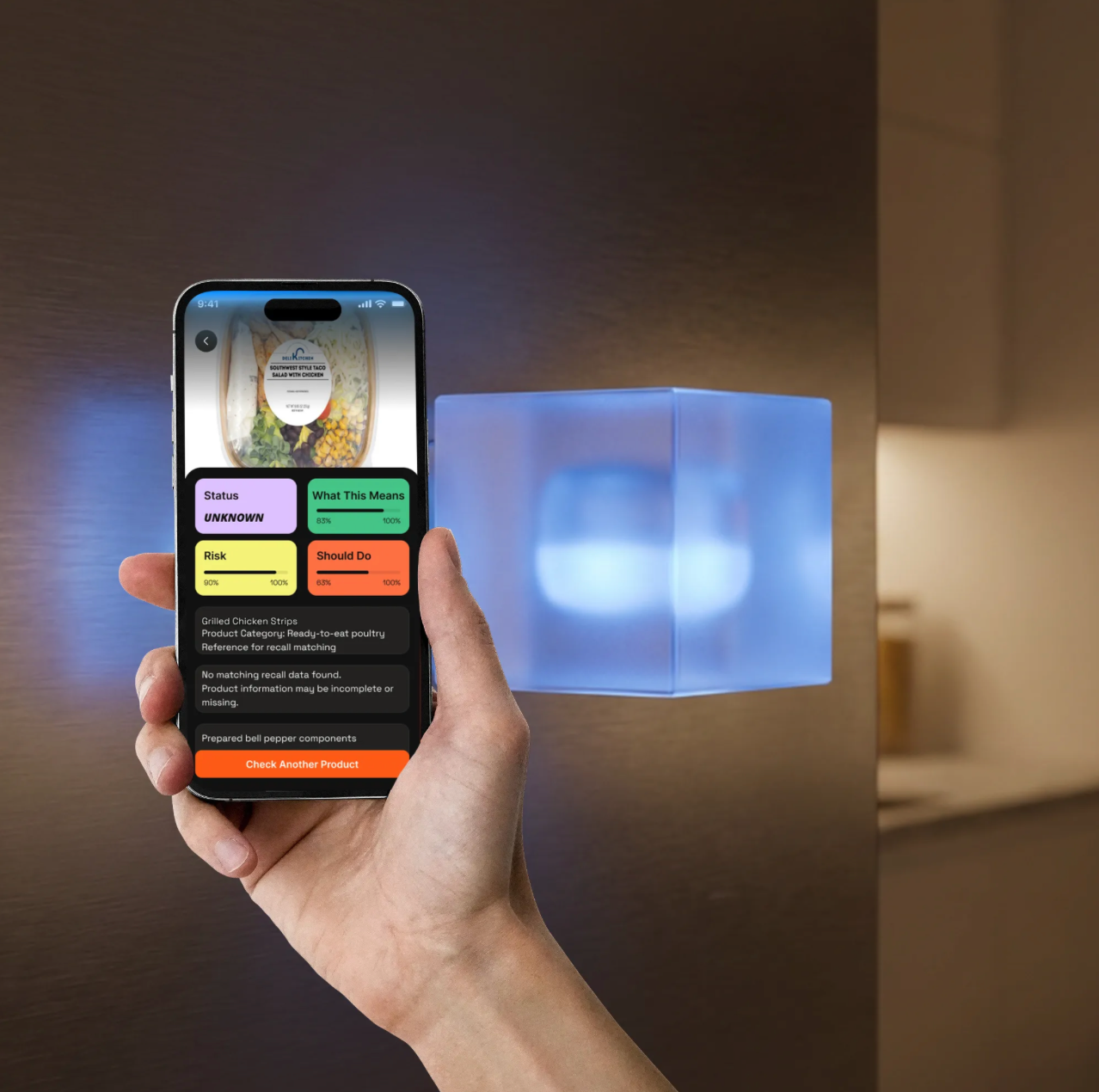
A Trader Joe’s product recall prompted the central question: when shoppers encounter a detailed public notice, how easily can they tell whether it applies to something they own—and what they should do next? This is the starting observation, not yet a measured finding about all consumers.
A recall notice can contain product identifiers, dates, regions, and instructions. But matching those details to an item in hand takes effort.
Design question: How might a scan help someone find the relevant information and understand the next action without hiding uncertainty?
The Trader Joe’s bag and packaging are visual references—not proof that this pictured product was recalled.
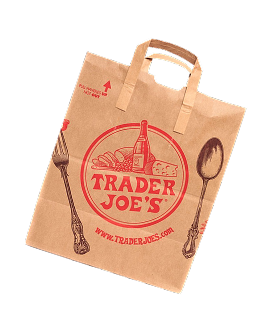
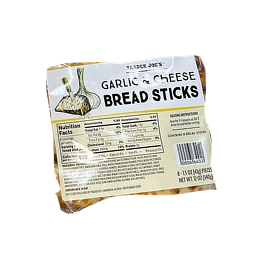
Official notices may include names, labels, lot codes, establishment numbers, distribution details, dates and instructions. Decode focuses on translating those specifics into understandable product-matching evidence and next actions, rather than merely shortening the notice.
Product name, brand, packaging, and batch or lot details.
Compare identifying details against the relevant recall notice, including affected dates and places.
Show the source, uncertainty, and appropriate advice—not an unsupported safety guarantee.
The project materials report interviews with 15+ shoppers and explore how institutions, retailers and consumers communicate. These qualitative groups suggest questions to investigate; they do not establish the frequency of confusion across the wider population.
High perceived risk can produce information overload and prolonged uncertainty.
Consumers may actively seek information while still being unsure how severe a specific warning is.
Familiar brands and established routines may override abstract technical warnings.
Publish affected products and official instructions.
Communicate relevant product, batch, and store details.
Determine whether an item matches and what to do.
Conceptual stakeholder map reconstructed for readability; it is not a diagram of an integrated live data service.
A clear interface must communicate which product details matched, which were not verified, where the information came from and what action the official notice recommends. Simplification should not remove essential qualifications.
HOW MIGHT WEHow might we help shoppers check whether an official food recall applies to a product they have, understand why, and act appropriately—without implying more certainty than the data supports?
Product / brand identifier
Lot and packaging information
Distribution and relevant dates
Recall reason and instructions
Does this item match?
What is known or unknown?
What action is advised?
Where is the original source?
The proposed flow uses packaging information as a starting point, then compares identifying details with an official recall notice. A barcode or product photo alone may be insufficient: lots, dates and other identifiers can require manual confirmation. No live recall-data integration or scan accuracy has been validated.
Product, batch, date, region and status from institutional notices; optional user-provided product context.
Determine which information is known, what requires review and what follow-up may be needed.
Present a readable match status, uncertainty, supporting details and a practical next step.
No relevant recall was identified in the checked source and scope. This does not prove the food is safe.
A product match or relevant identifying details remain uncertain; inspect the official notice.
Provided identifying details match an applicable recall; follow the official warning and avoid use when directed.
A potentially relevant update has not yet been reviewed; it is not a product safety result.
The data, connectivity or identifiers are insufficient for a trustworthy comparison.
These are proposed UI communication states, not official safety classifications. “No matching recall found” is not an assurance that a product is safe; uncertain or unavailable data must not be silently treated as a negative match.
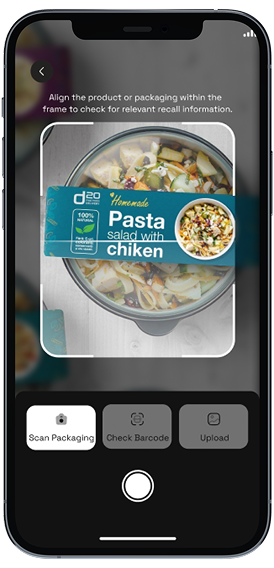
The mobile concept organizes the main task: capture a product identifier, verify details that a scan cannot establish, compare with relevant official notices, then show matching evidence, uncertainty and the next recommended action. The UI has not been integrated with a live recall database.
The main task flow focuses on scanning and interpretation. Additional screens show alternative results, dashboard and notification states.
Prototype boundary: The mobile screens are interface designs. LED experiments were tested separately with Arduino. No live phone-to-device connection or verified real-time recall integration is claimed.
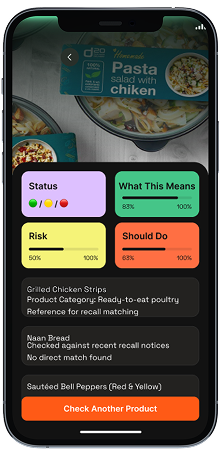
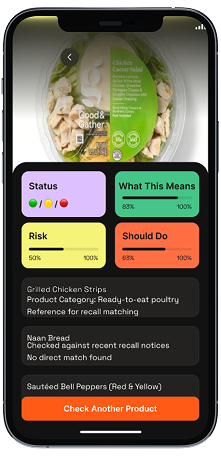
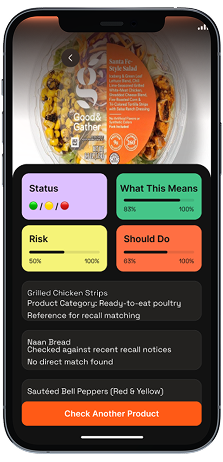
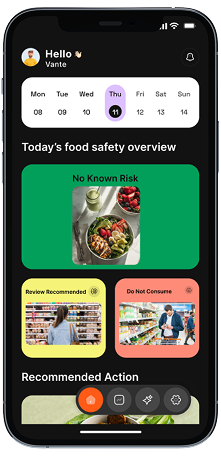
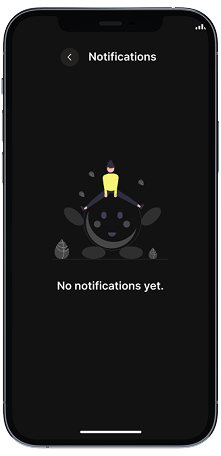
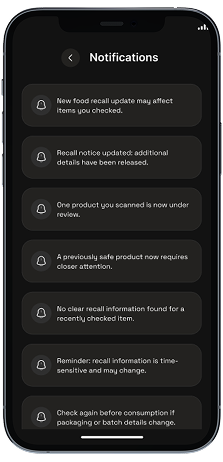
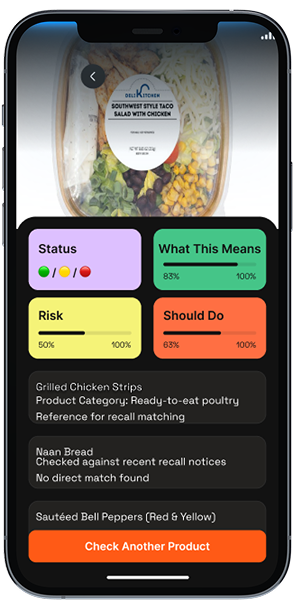
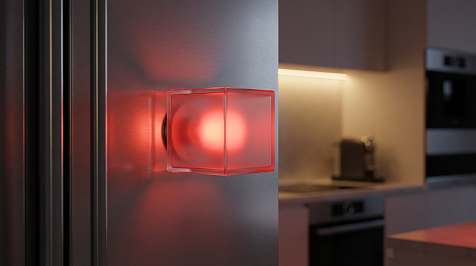
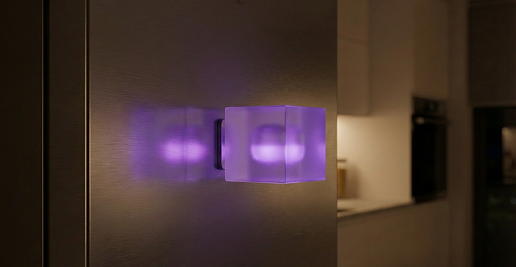
As a future connected-device direction, a fridge-mounted light could signal an unreviewed or unresolved food recall item so it is not forgotten after the phone is put away. The light would not certify that every food in the kitchen is safe, and the app would remain the place to read product-specific details. Arduino LED experiments and Blender state studies were completed separately; no phone-to-device connection exists yet.
PHONE: identify, explain, and guide action. LIGHT (future concept): make an unresolved item noticeable at home. The device would need a clear target item, update mechanism, offline behavior, and a path back to the phone before it could be considered usable.
The following photographs document separate light and enclosure experiments. The five digital state visualizations represent a proposed product appearance, not five assembled devices.
These images document the enclosure model and separately tested LEDs. The polished device and kitchen scenes below are concept renderings.
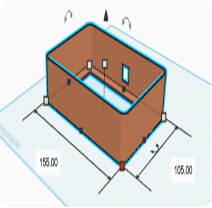
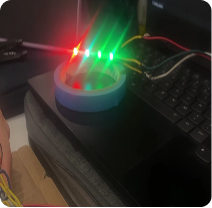
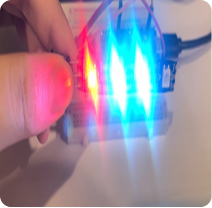
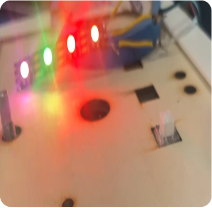

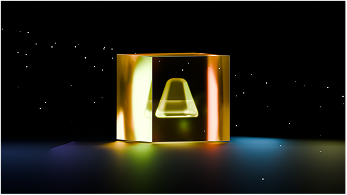
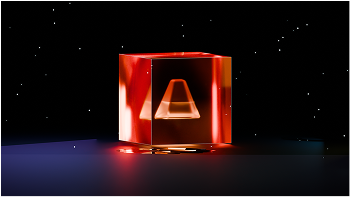


This future direction explores a visible, color-coded status light near food storage. The kitchen scenes are concept renderings, not photographs of an integrated working system.
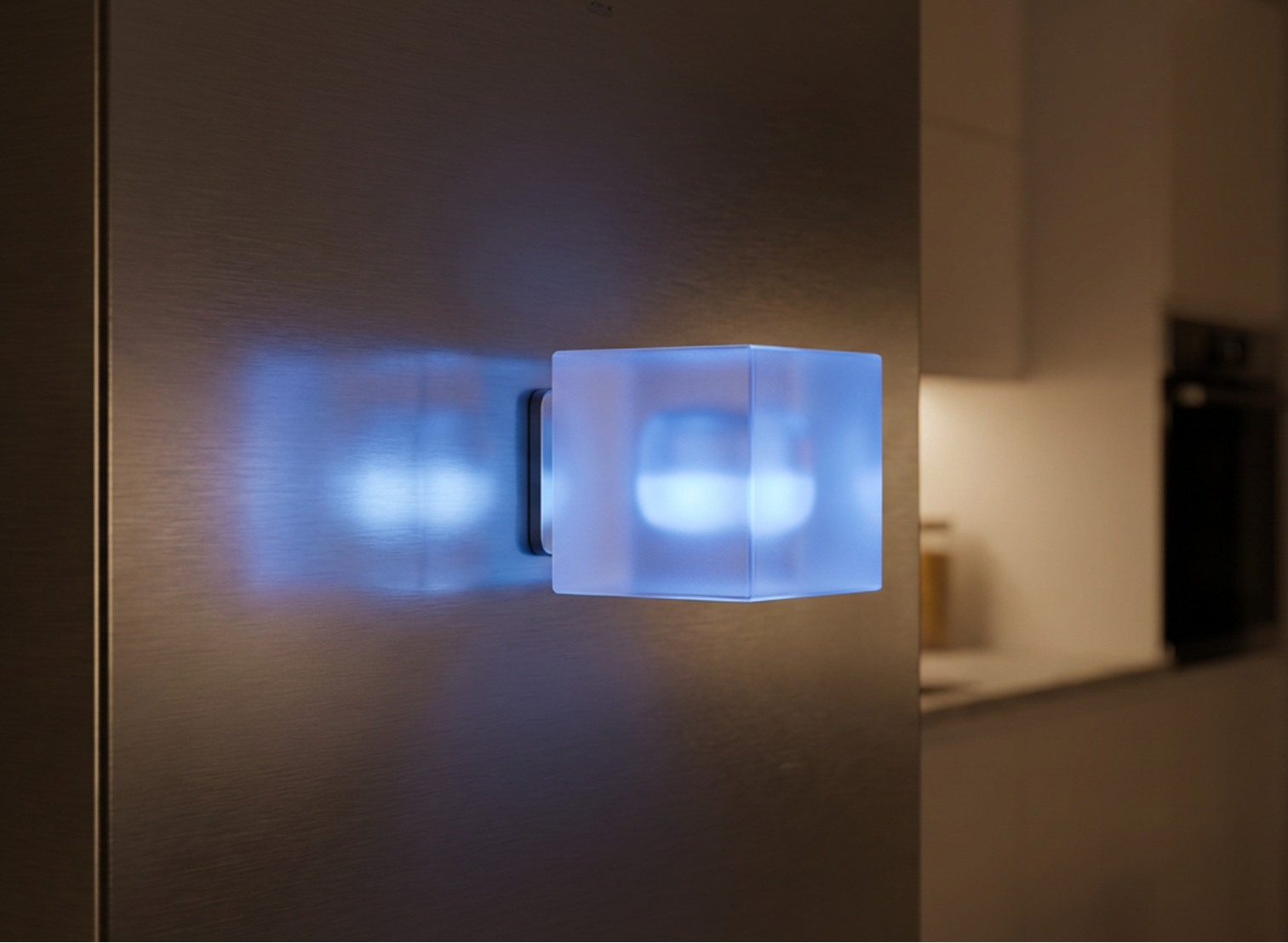
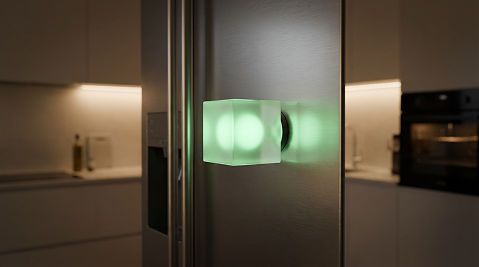
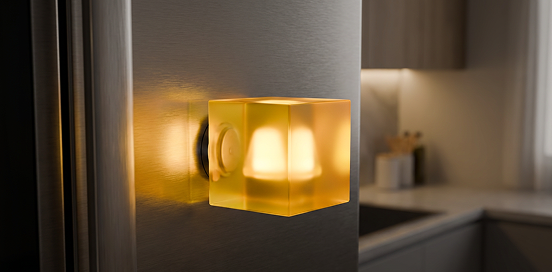
The strongest part of Decode is translating technical recall information into an intelligible, evidence-based next action. The mobile screens and Blender renderings are design proposals; Arduino LED tests are separate physical experiments. The integrated system and its effect on real user decisions remain unvalidated.
Research synthesis, notice-to-decision framing and mobile scanning/result screens; reported interviews should be supported by original notes when presented.
Separate Arduino-controlled LED trials and Blender visualizations of potential light states, not a connected mobile–hardware prototype.
Test recall matching with real notices, measure comprehension and correct actions against the source notice, then investigate if a kitchen light improves follow-through.