New place, unfamiliar rhythms
Jet lag, language differences and a disrupted routine make everyday interaction harder.
An AI-mediated emotional transition system designed to support, not replace, human connection.
Border Sense is an AI-mediated emotional transition system for international students navigating cultural displacement, self-doubt and loneliness. It functions as a temporary support layer that helps users acknowledge emotions, slow internal stress, practice communication and gradually regain the confidence to reconnect with the real world.
Rather than encouraging digital dependency, the concept is designed to gently guide students back toward offline presence, agency and human relationships at their own pace—with clear moments to pause, decline or step away.
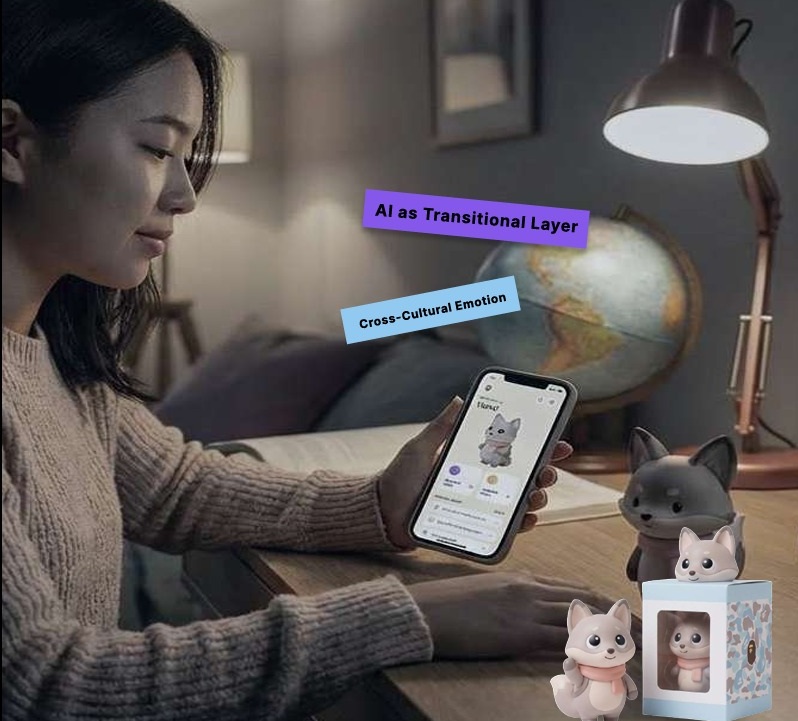
Moving across cultures can unsettle familiar routines and support networks. A student may appear socially present while privately struggling to find a place to belong.
Jet lag, language differences and a disrupted routine make everyday interaction harder.
Students may be surrounded by people while still finding it difficult to ask for support.
A low-pressure practice moment can help prepare for a real conversation or activity.
My original research combined a questionnaire of 150 international students with exploratory and in-depth interviews. I investigated the timing of loneliness, language and cultural friction, reluctance to reach out, and what might make connection feel safer. These are my own research activities—not simulated personas or hypothetical survey data.
90 of the 150 participating students selected a frequent or near-constant loneliness response. This figure describes the surveyed sample; it is not a prevalence estimate for all international students.
Individual interviews shaped the early design direction. The names below reflect the research notes provided; quotes and findings are paraphrased rather than fabricated as verbatim excerpts.
Loneliness could deepen at night; language concerns made reaching out feel more demanding.
Social contact and inward emotional vulnerability were not the same thing; casual chats did not always create support.
Changes in relationships and familiar circles could make home feel quiet, even for someone who enjoyed being around people.
The research shifted the problem away from simply increasing social opportunities. Students also needed to feel understood and emotionally ready to participate—without being pressured to disclose or join a group before they wanted to.
Language friction, discomfort with vulnerability and fear of judgment can make the first message feel consequential.
→ Design an optional private entry pointQuick conversations can soothe a moment without necessarily building a trusted relationship beyond the screen.
→ Help users prepare, then step backStudents differ in their comfort with groups, expression and unfamiliar situations.
→ Offer gradual, reversible stepsREFRAMED DESIGN QUESTIONHow might an AI companion help students move from private emotional acknowledgment to voluntary real-world connection—without turning support into dependency?
The concept combines an individual support layer with a gradual social layer. The intended outcome is greater emotional awareness, reduced pressure around expression and more confidence to engage with real people—not increased time spent talking to North or dependence on the companion itself.
North uses non-human character design, mood check-ins, optional audio and cultural snapshots to create space for self-expression.
Scene rehearsals, pseudonymous groups, weekly prompts and private-response options lower the perceived cost of taking part.
With explicit interest and an appropriate safety process, members may opt into offline activities and later reflect on them.
The same comforting AI presence that can lower the barrier to expression could also encourage excessive digital attachment. The design should let users decline suggestions, control sharing and leave the interaction without pressure.
The following mechanisms are proposed design behaviors in the original concept; they are not claims that matchmaking, moderation or event facilitation is already running.
After onboarding, students are matched into preference- and personality-aligned groups inside a shared North American international-student context, while still limiting how much personal information they disclose.
Short themed prompts—such as “The first time I cried abroad was because…”—invite a sentence, emoji or image before requiring a direct conversation.
A Tree Hole board lets members share emotions anonymously and respond through text, emoji or color. Different response levels lower pressure, but visibility and consent still require careful design.
A weekly “temperature” summarizes interaction health and can trigger a virtual host when a group becomes too quiet—intended to facilitate care, not rank members or pressure them to post.
Once trust is established, the concept proposes optional meet-ups when members opt in, at least three people participate and identity checks are completed. These steps help, but they do not guarantee safety on their own.
Personal milestones reflect self-chosen experimentation and real-world experience. Growth unlocks are tied to confidence-building steps and group rewards, rather than app engagement or chat streaks.
The system spans structured onboarding, private AI support, optional peer interaction and potential offline participation. A student can pause or return at any point; the AI should not infer readiness for social contact without asking.
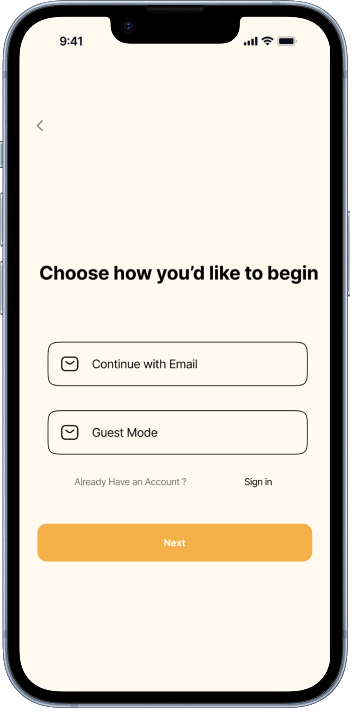
Answer guided questions about wellbeing, personality, adjustment challenges and communication boundaries.
Choose mood logging, a quiet mode, white noise, study support or a practice conversation.
Enter AI-matched groups and contribute through weekly prompts, Tree Hole posts or low-pressure reactions.
Join an opt-in activity, reflect afterward and unlock new growth-map milestones at your own pace.
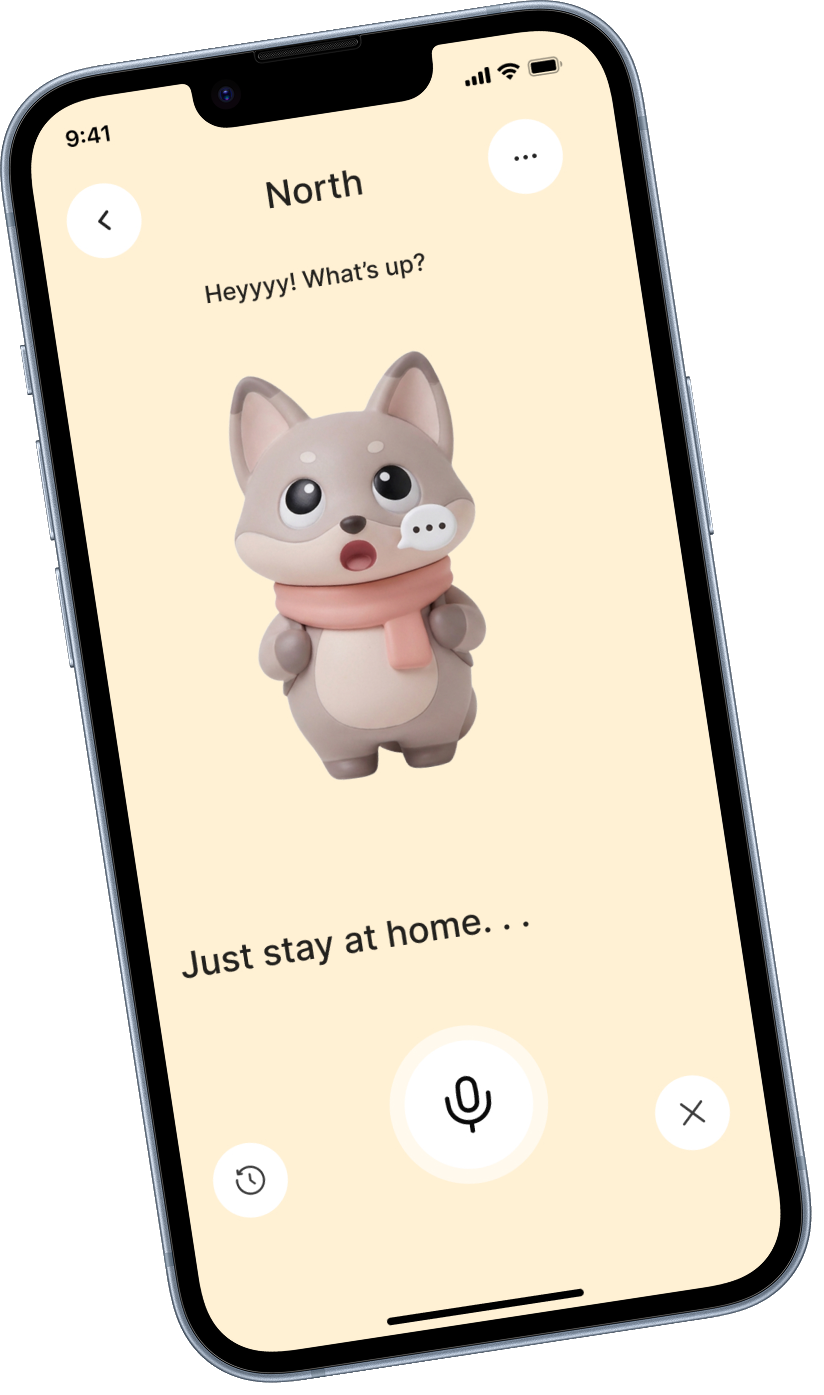
North can listen, offer a quiet activity or end the conversation. It should not repeatedly nudge the user into a social event.
Show what the event involves, what information is shared and how to decline or leave before confirming any participation.
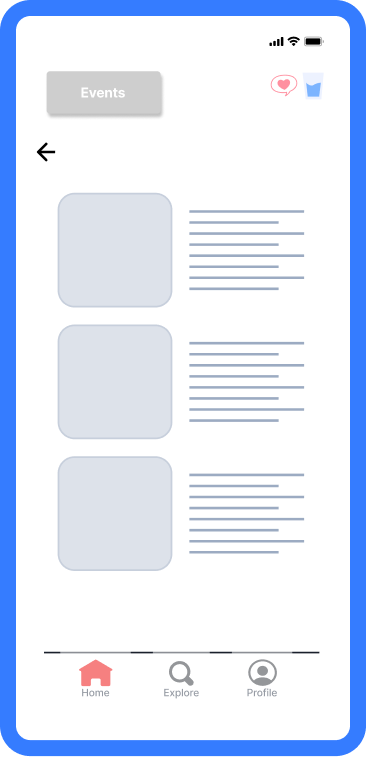
Early wireframes evolved into high-fidelity mobile screens exploring onboarding, AI-supported reflection, group participation, and gradual offline connection.
These selected wireframes are shown separately from final UI to make the level of fidelity clear.
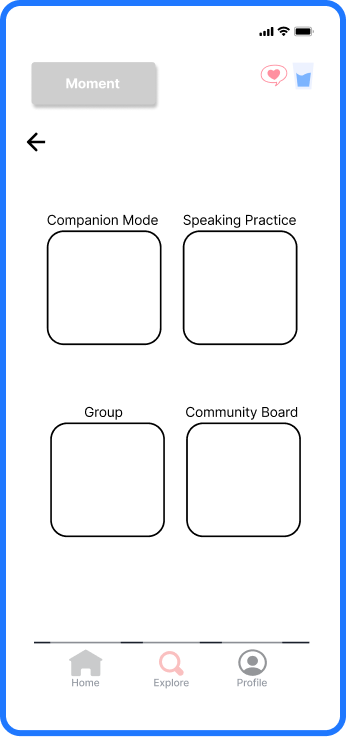
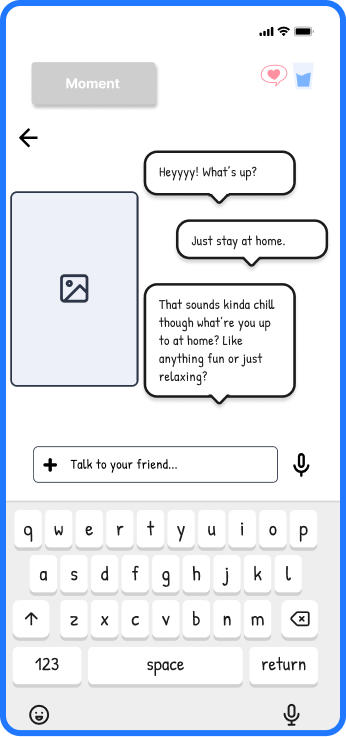
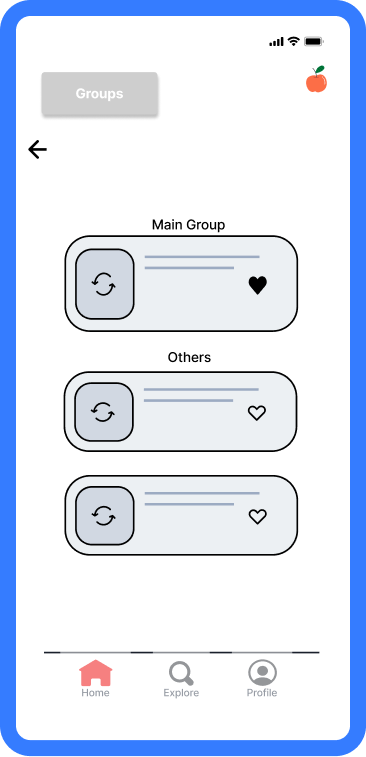
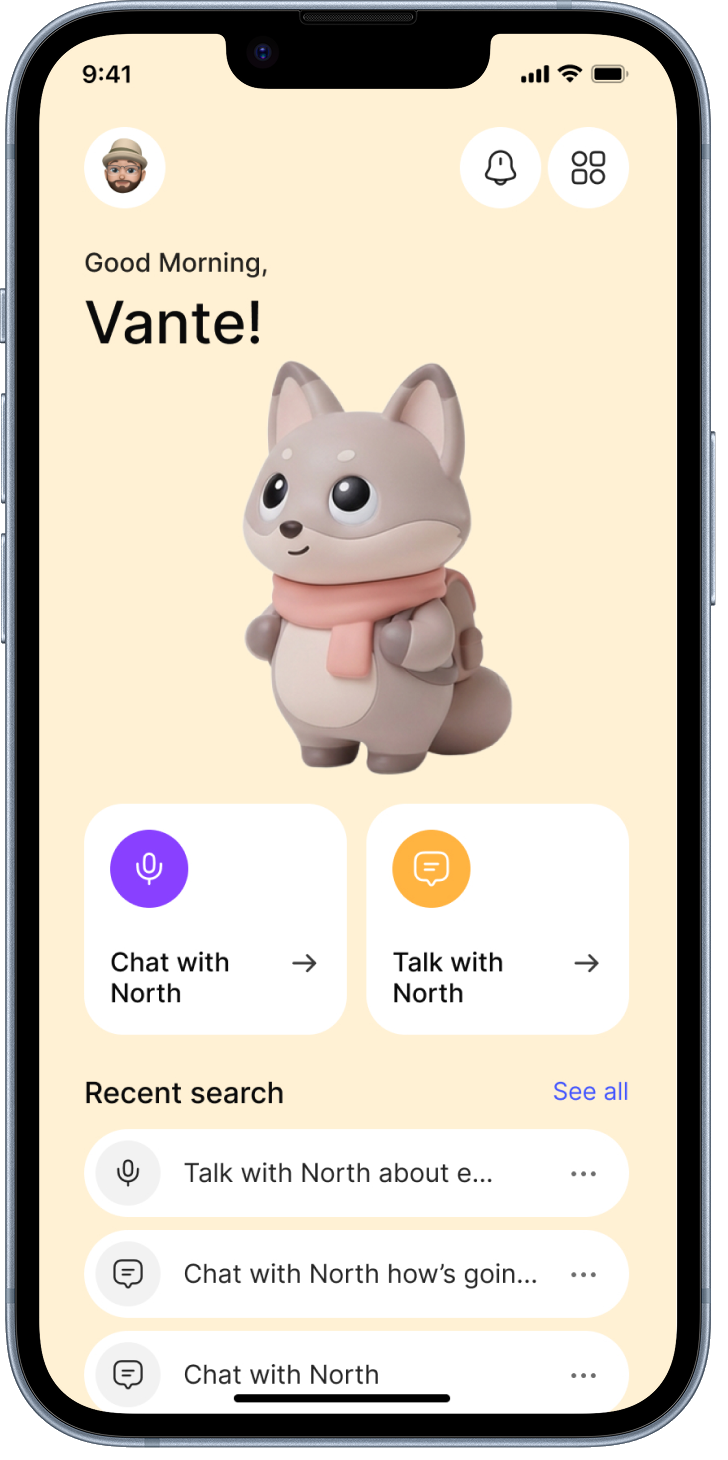
North offers a private place to check in, speak or save small moments. Its role is to reduce the pressure of the first step so that students can eventually reconnect with people beyond the screen.
Before entering AI conversation, students answer guided questions related to wellbeing, personality, adjustment difficulties and preferred communication style so the system can build an initial support profile.
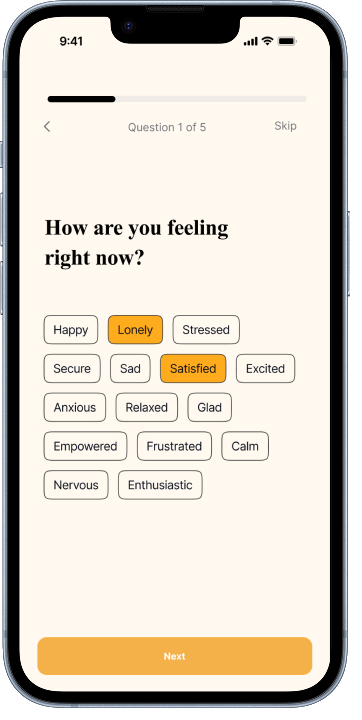
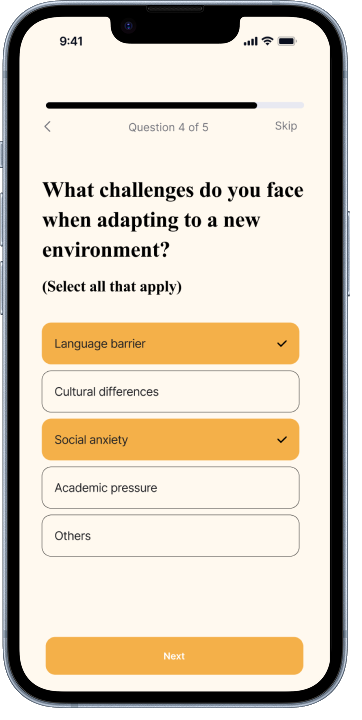
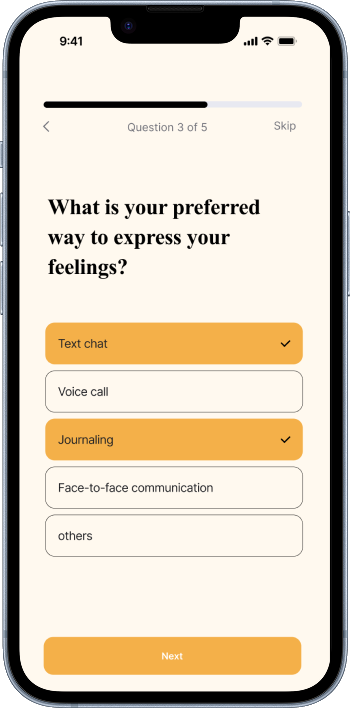
Daily greetings, cultural snapshots and mood logs create optional moments of reflection without requiring extended conversations, while the system gradually refines the user profile over time.
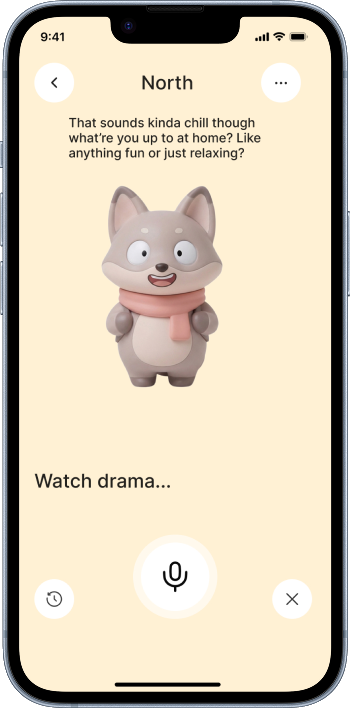
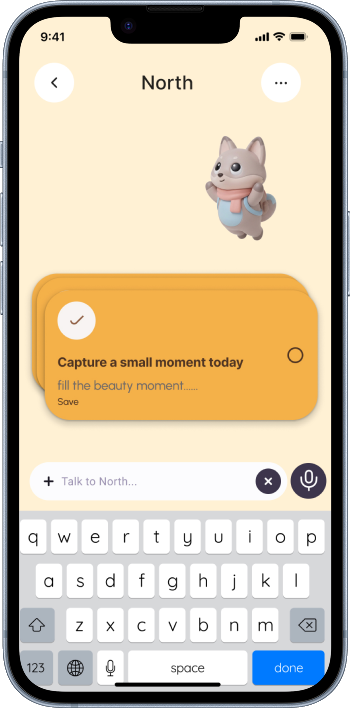
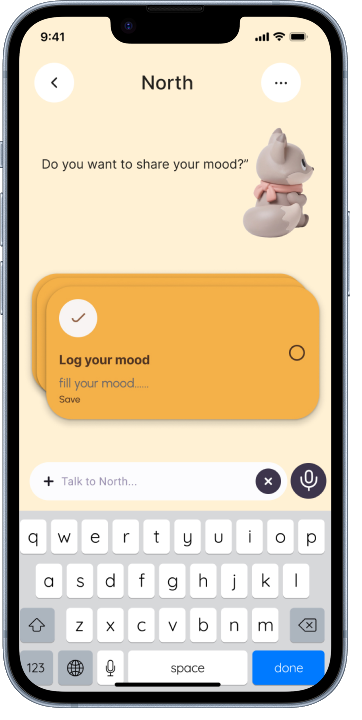
Speaking practice, AI-matched groups, Tree Hole participation and activity discovery are designed as opt-in routes toward real human interaction. The screens express design intent; the impact of this staged progression still requires further testing.
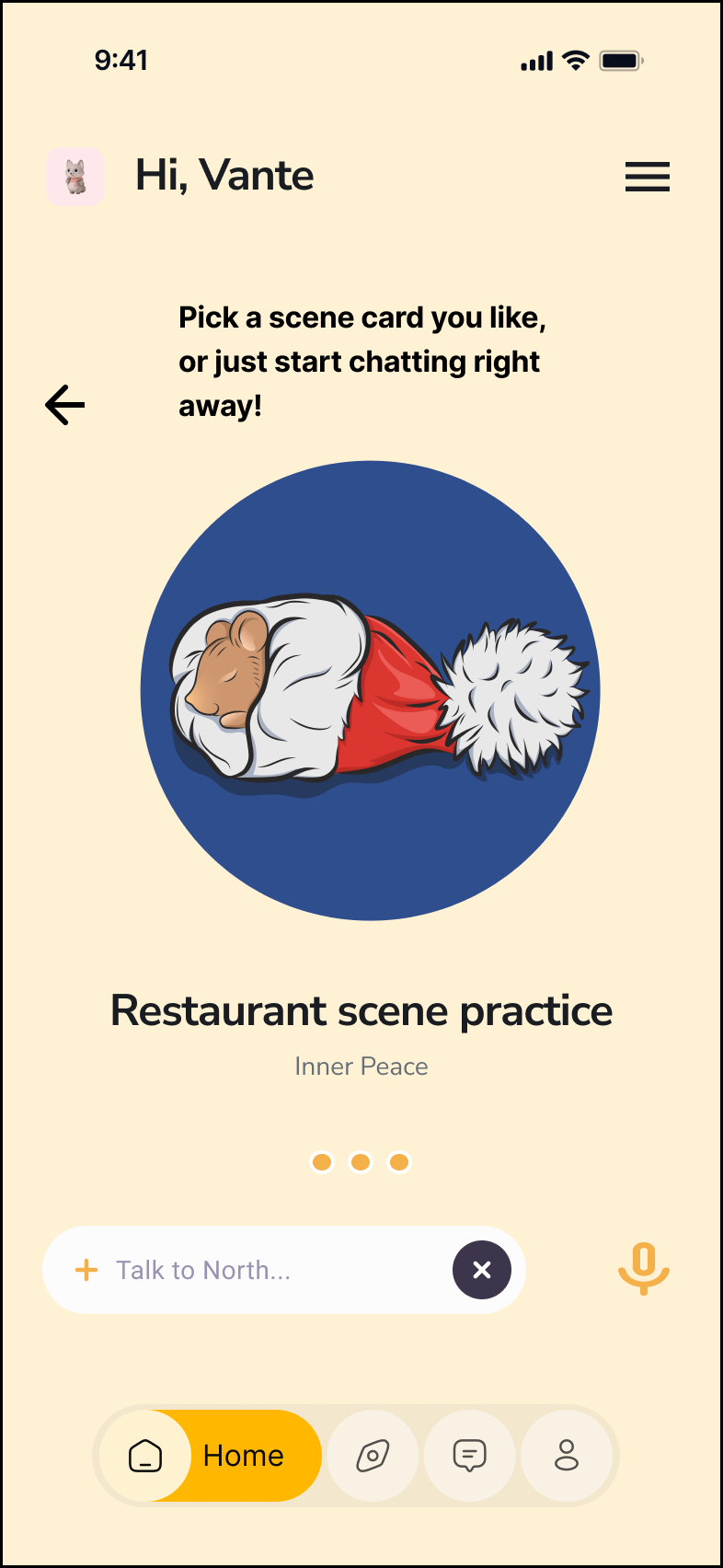
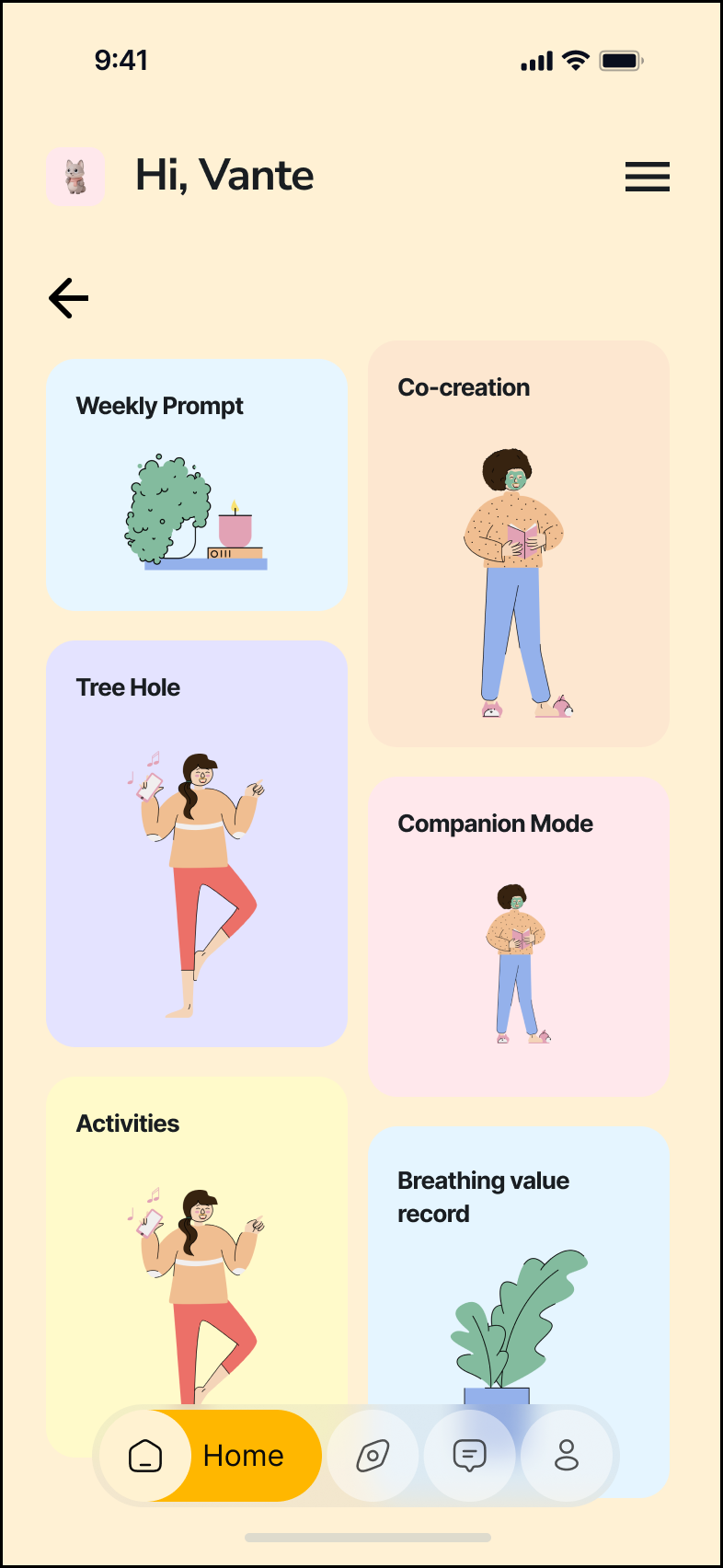
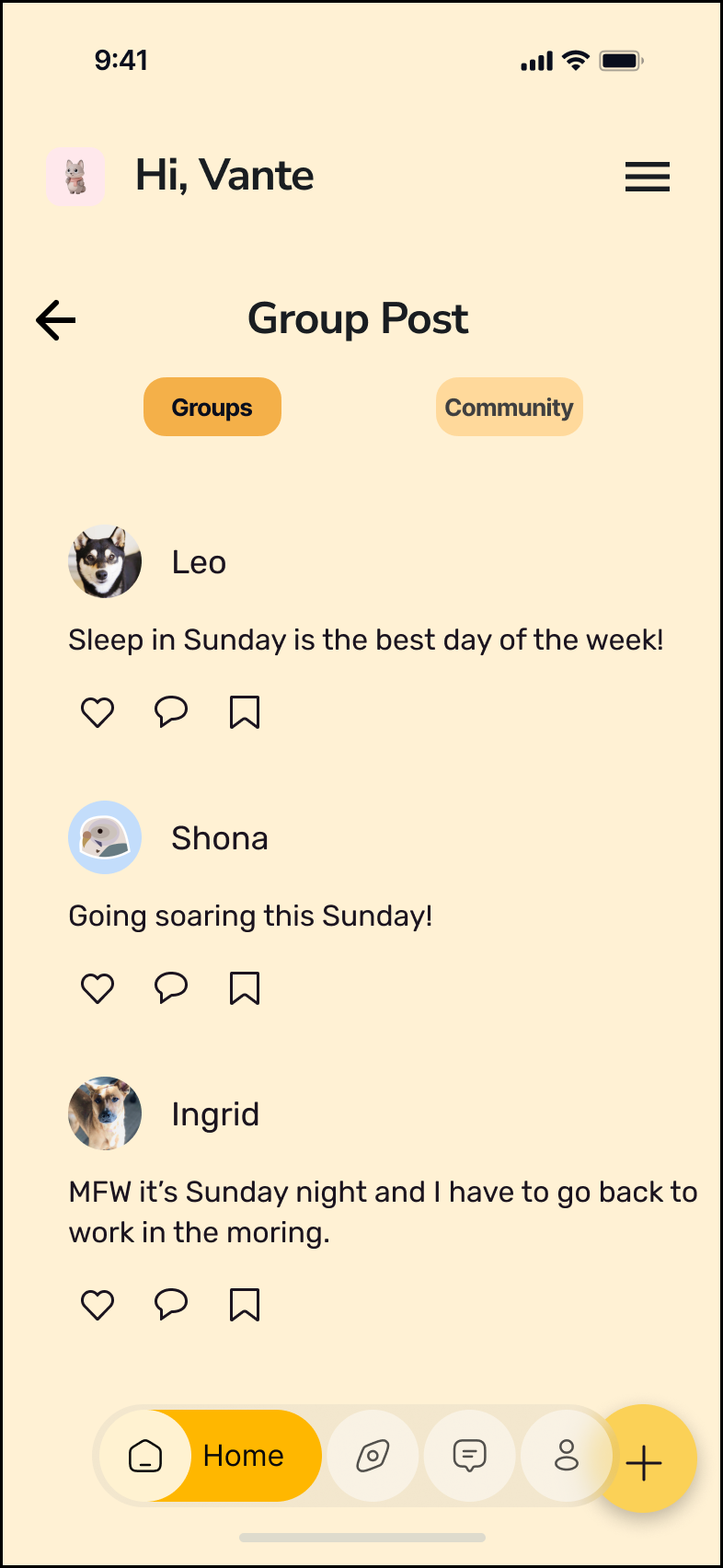
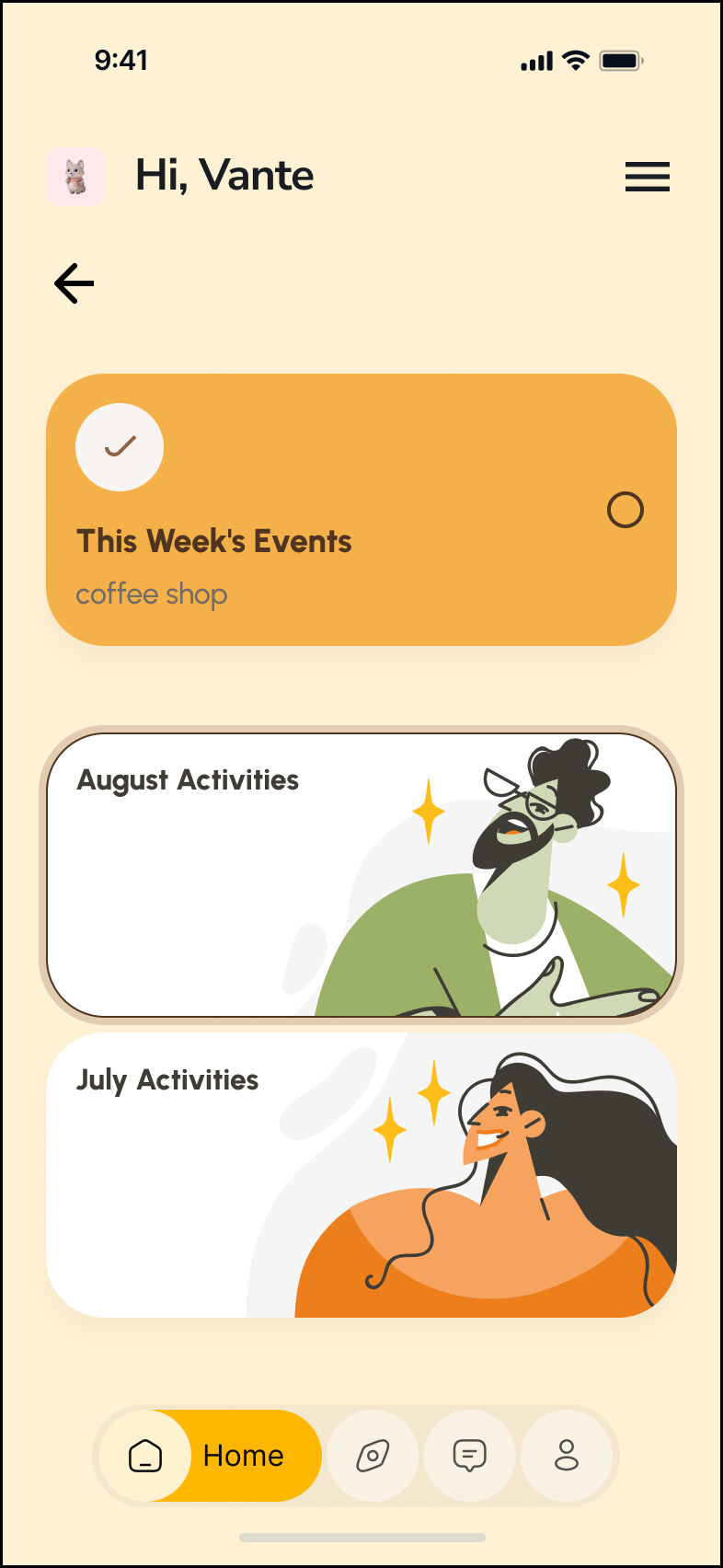
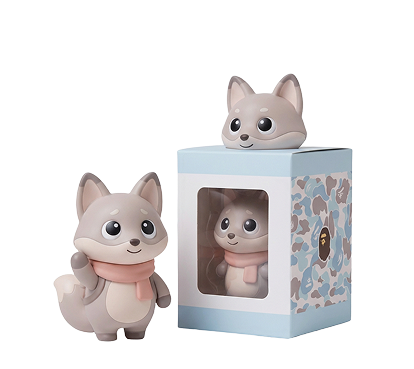
North uses a soft cartoon identity rather than a human-like persona, helping the first interaction feel lower-pressure and more approachable. The goal is not attachment to a virtual character, but support that helps users rebuild confidence in real relationships.
The mascot system also extends beyond the screen: different growth milestones can unlock companion-related icons and a proposed blind-box style offline pickup activity, creating a playful reason for users to meet in person and exchange experiences.
The design includes sensitive emotional data, AI guidance and connections between strangers. These are product responsibilities, not details that a friendly mascot can solve on its own.
Skip onboarding items, select expression modes, decline a group recommendation and stop using North without penalty.
Distinguish private mood logs from community contributions; make matching inputs transparent and allow deletion or withdrawal.
Explain that North is an AI companion, not a person or mental-health provider. Resource links, an “automatic help-seeking” button and crisis support pathways require regional verification.
Proposed meet-ups require clear event details, reporting pathways and participant controls; a three-person minimum and ID check are not sufficient safety guarantees.
Design status: These safeguards and automated behaviors are intended requirements for future prototyping and testing, not completed or independently audited protections.
My initial interviews and questionnaire documented the problem and shaped the design. They did not establish that the product reduces loneliness or increases offline relationships. That effect remains the central question for future prototype evaluation.
Primary questionnaire and interviews, synthesis, staged interaction strategy, user flows, low-fidelity wireframes and high-fidelity screens for the proposed system.
Opt-in social progression, culturally relevant prompts, contextual pseudonymity, controlled sharing, milestone-based growth and clearly defined limits for AI support.
Usability and longitudinal research should examine user agency, confidence to reach out, safe participation and actual offline follow-through—not chat duration.