Lifestyle fit
Does a layout support how people actually use their space?
From arranging furniture to making confident decisions.
An interactive furniture decision-support concept that makes budget, mobility, assembly and product trade-offs easier to compare.
Explore interactive prototype ↗Choosing furniture involves more than dimensions: cost, assembly, mobility and changing routines all shape what works. This project makes those trade-offs easier to see.
Does a layout support how people actually use their space?
What happens if a household's routines or needs evolve?
Is the purchase worth the trade-offs within a real budget?
What would make the recommendation understandable enough to trust?
Three exploratory conversations informed distinct needs around travel, home working and budget-sensitive decisions.
Delivery and assembly support, portability, ease of disassembly, and quicker decisions were central concerns.
Design implicationCompare handling, installation requirements, and service options—mark unavailable service data clearly.
Ergonomics, cable management, and task-specific arrangements mattered more than visual appearance alone.
Design implicationAssess the whole workspace and surface missing ergonomic measurements rather than assume suitability.
Budget allocation, low tolerance for errors, and the value of complete furniture combinations stood out.
Design implicationShow basket-level costs, trade-offs, and which constraints cannot be met together.
I reviewed five IKEA planning tools. Each supports a distinct task; the opportunity lies in comparing practical priorities across those tasks.
| Planning tool | Primary scope | Strength observed in the review | Decision-support opportunity |
|---|---|---|---|
| PAX Planner | Storage / wardrobe | Cabinet and internal configuration; measurement validation | Relate storage choices to routines and future needs |
| BESTÅ Planner | Modular storage | Combine wall-mounted and floor-standing components | Compare longer-term spatial and budget trade-offs |
| Kitchen Planner | Kitchen space | Precise dimensions and system-level configuration | Surface cross-room or life-stage priorities |
| Office Planner | Workspace | Desk / chair placement and zoning | Connect work patterns with other room uses |
| IKEA Kreativ | Room visualization | Explore products in visual room context | Explain why a set of choices is a good fit |
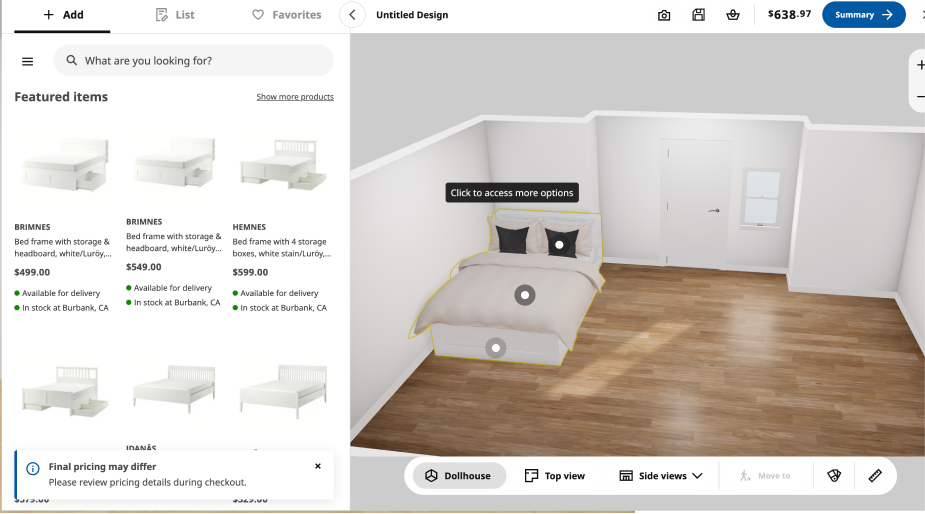
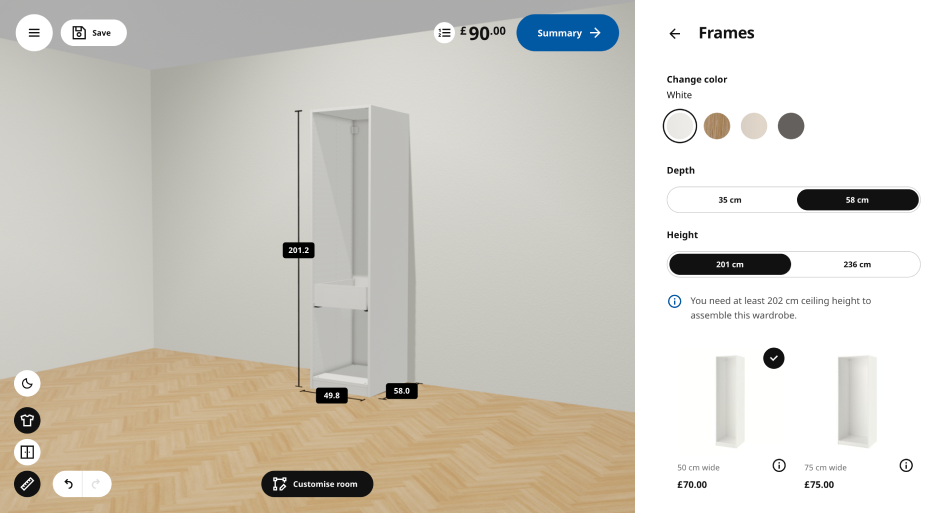
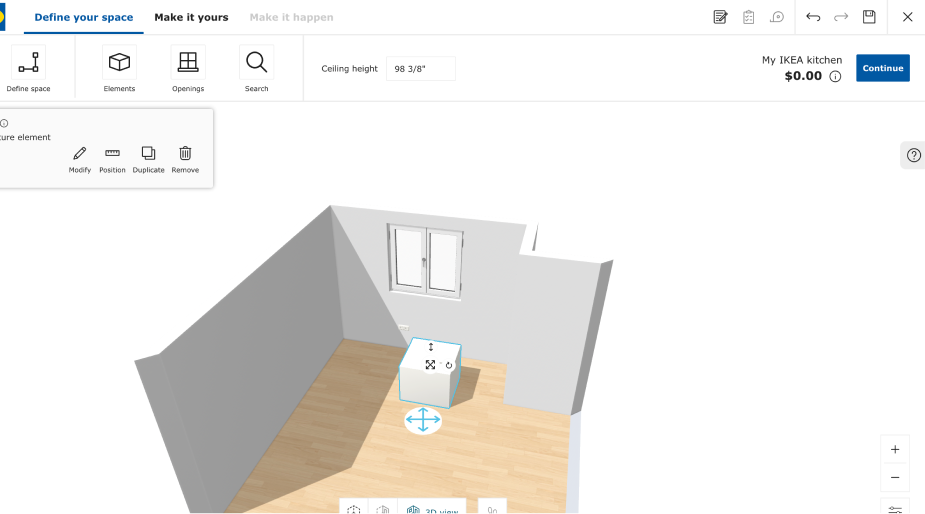
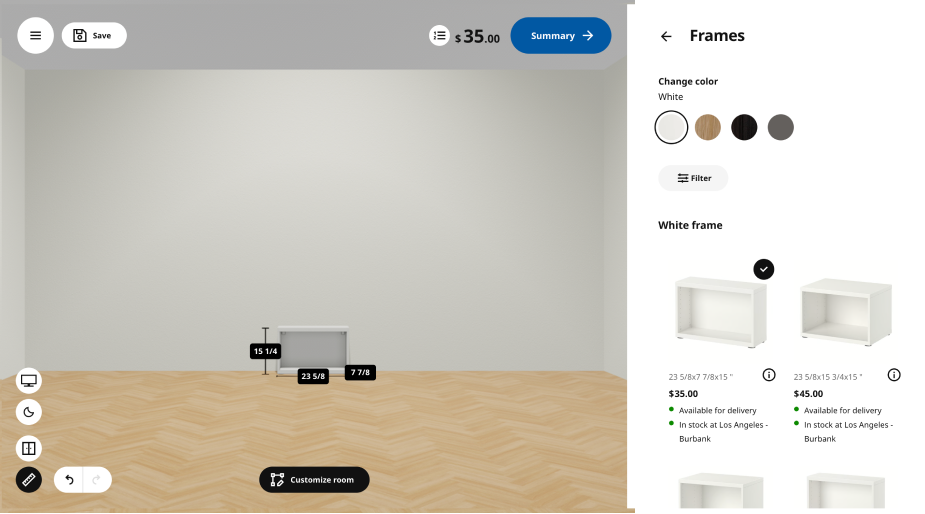
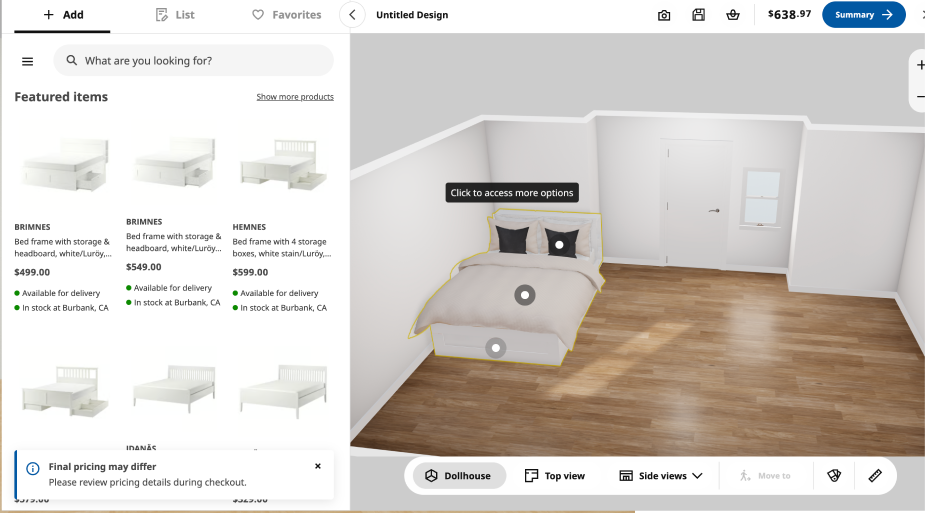
Existing IKEA tools support room visualization and personalized suggestions. This concept focuses on comparing practical constraints across choices.
Official IKEA Kreativ capabilities ↗IKEA AI assistant announcement ↗Rather than replacing specialized planners, the proposed decision-support layer could help users compare plausible scenarios and understand their consequences.
Present alternative layouts with visible trade-offs rather than a single recommendation.
Bring storage, furniture, room use, and cost into the same comparison.
Account for travel patterns, handling capacity, moving frequency, and changing household needs.
Explain the practical trade-offs: cost, assembly effort, weight, adaptability, and space.
A frequent-traveler scenario translates research themes into concrete purchasing constraints.
What is the furniture price, and are delivery/assembly costs separate?
How many people, steps or tools might be required? Verify against the product manual.
What are the packaged weight and dimensions? Is disassembly practical?
Can the item adapt to another apartment or changing routines?
Test the interactive prototype: set constraints, compare products, build a furniture set and inspect conflicts. Optional natural-language interpretation requires a configured service.
Adjust budget, maximum package weight, wall-anchoring requirements and priorities. View why products match or are excluded, with official product links and missing data identified.
Open full-screen prototype ↗Integration concepts show how AI Room Planner could be accessed from existing IKEA discovery, room-planning, mobile, and checkout experiences.
Invite room goals and everyday routines before asking for precise configuration.
Entry pages / inspirationCompare options around goals rather than committing to the first layout.
Room planning / product setsMake reasoning and sacrifices visible before the user decides.
Alternatives / comparisonBring concise guidance into cart and checkout without pressuring a purchase.
Cart / checkoutProposed entry points within existing navigation and planning flows.
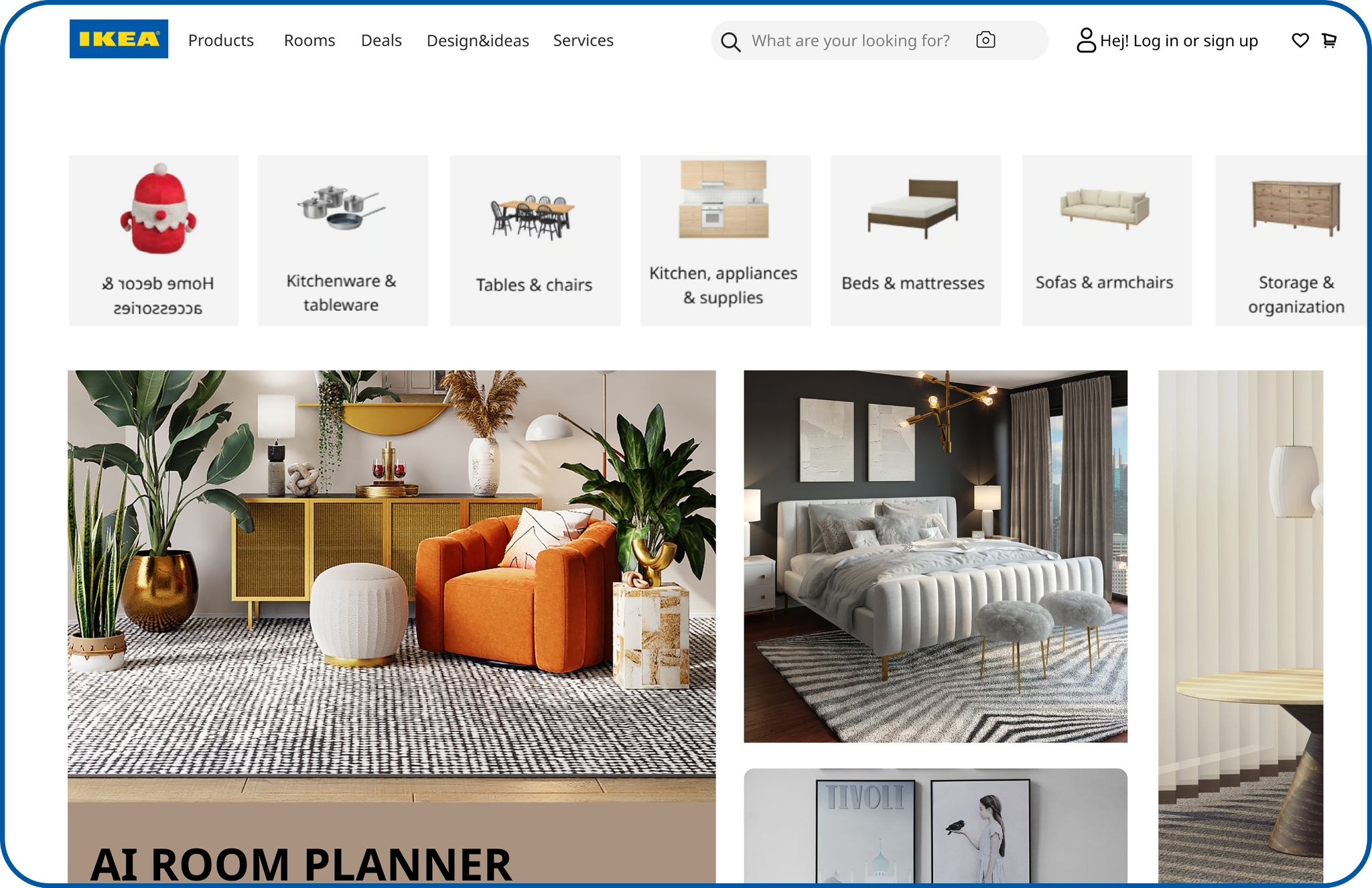
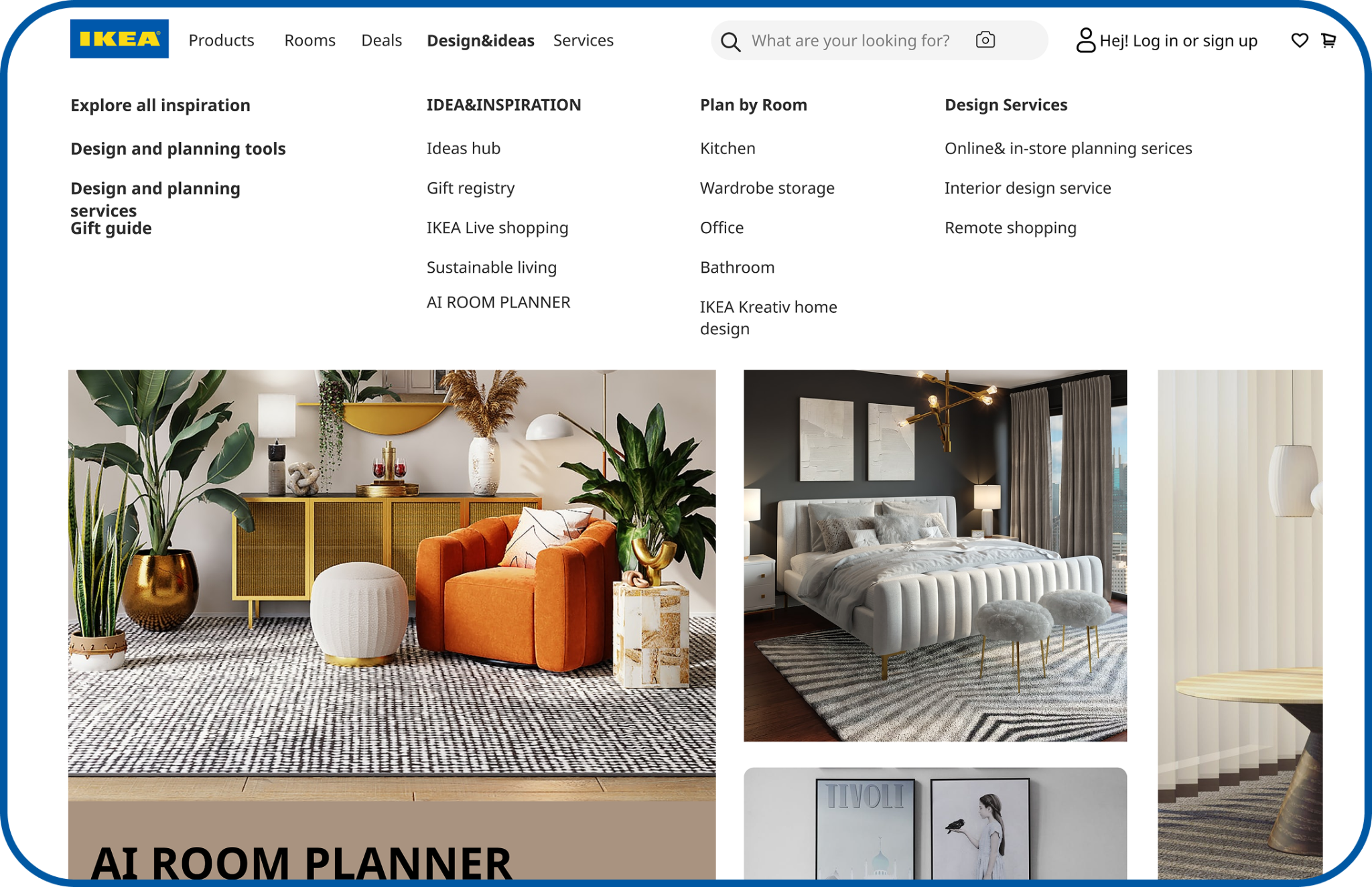
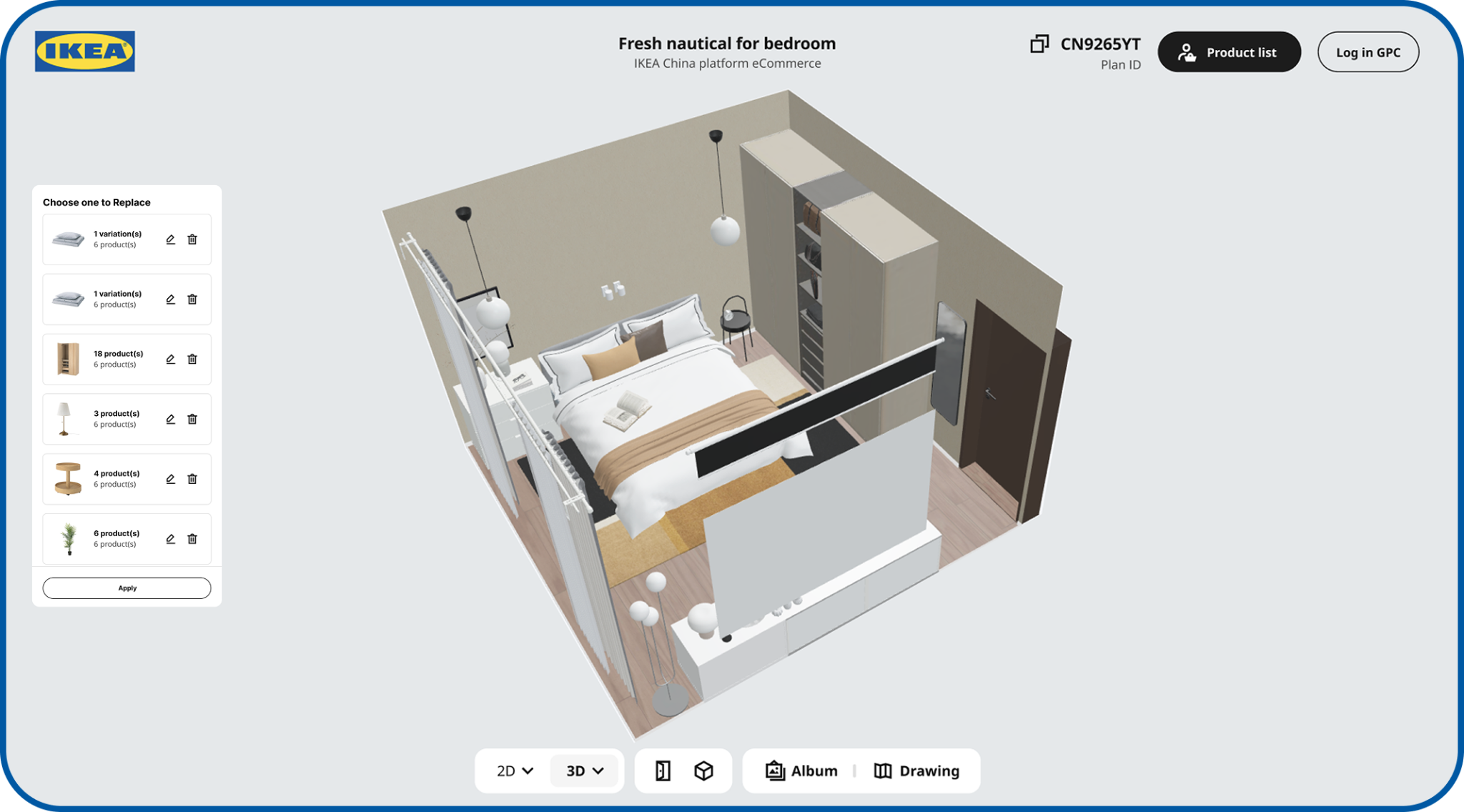
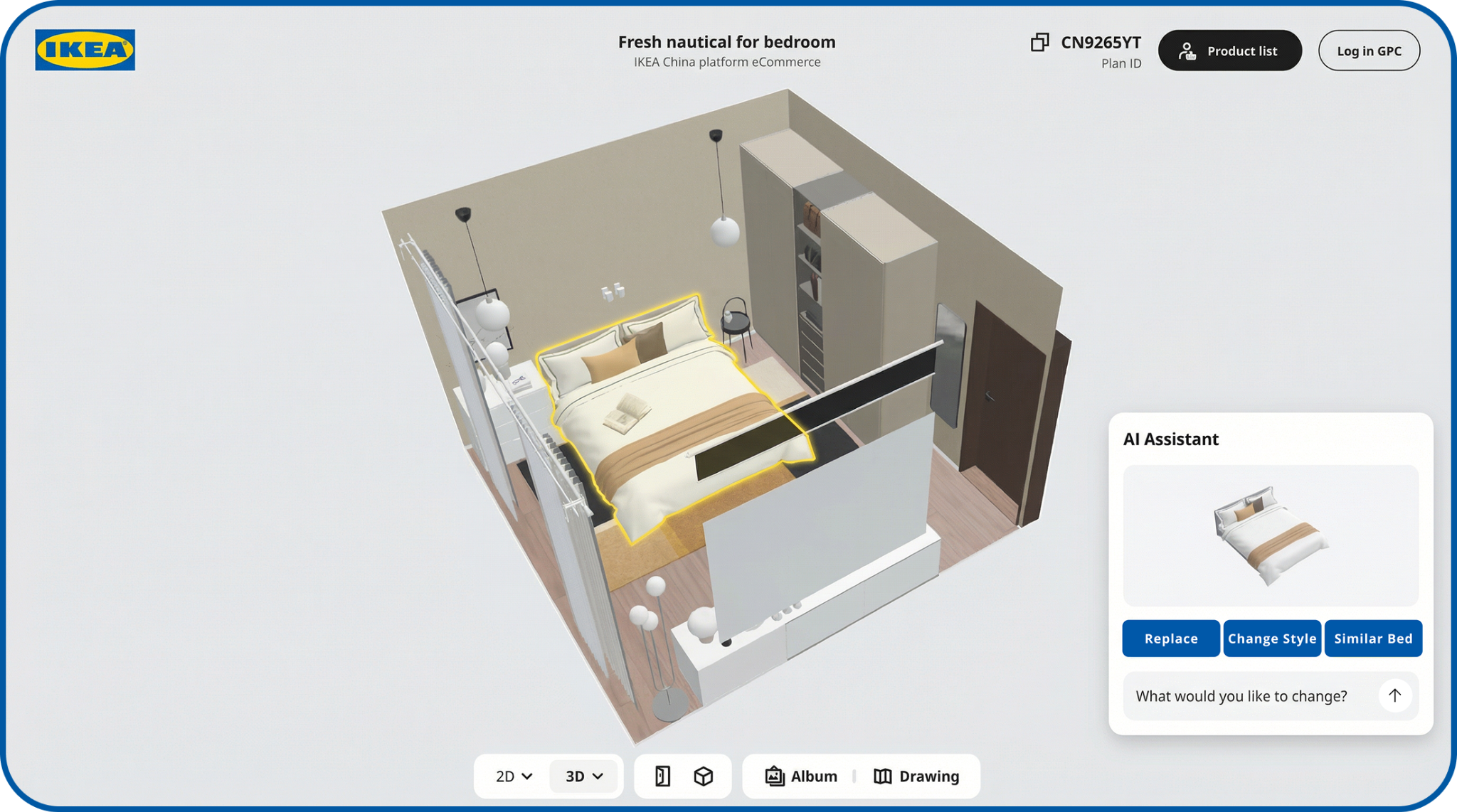
Concept screens showing where AI actions could appear in the mobile experience.
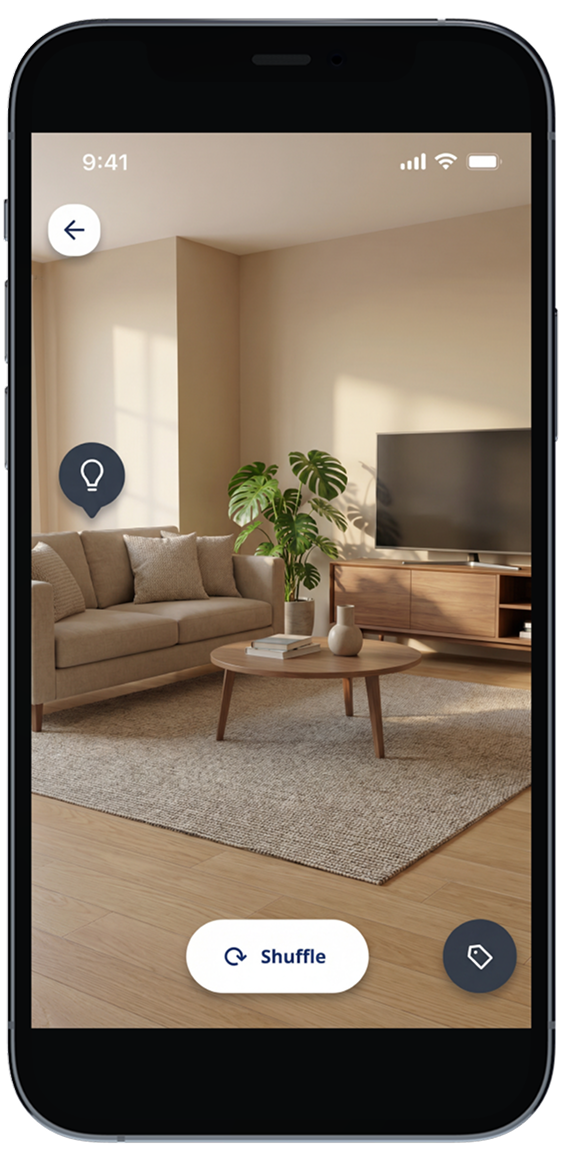
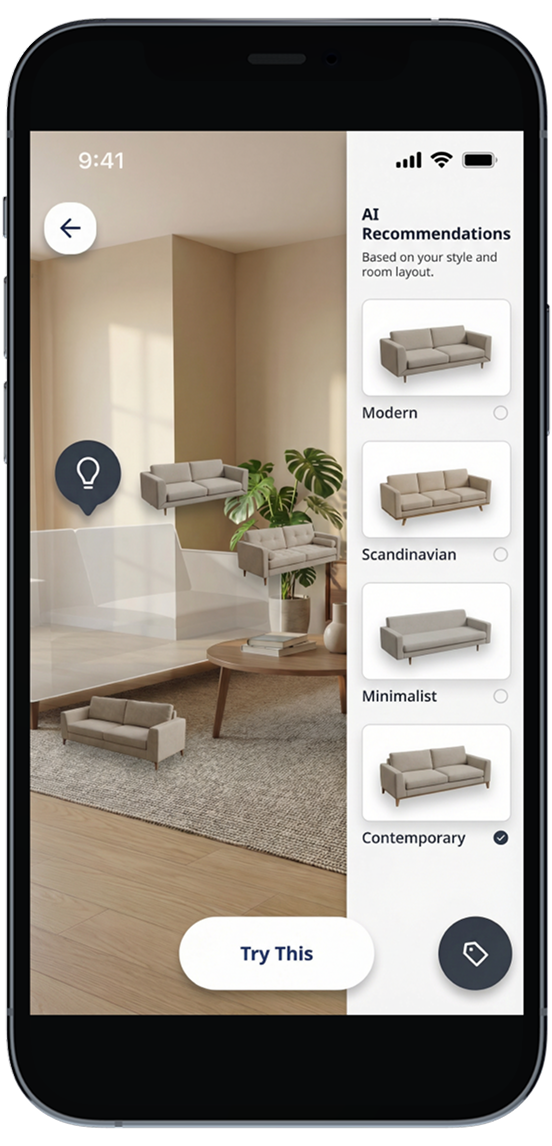
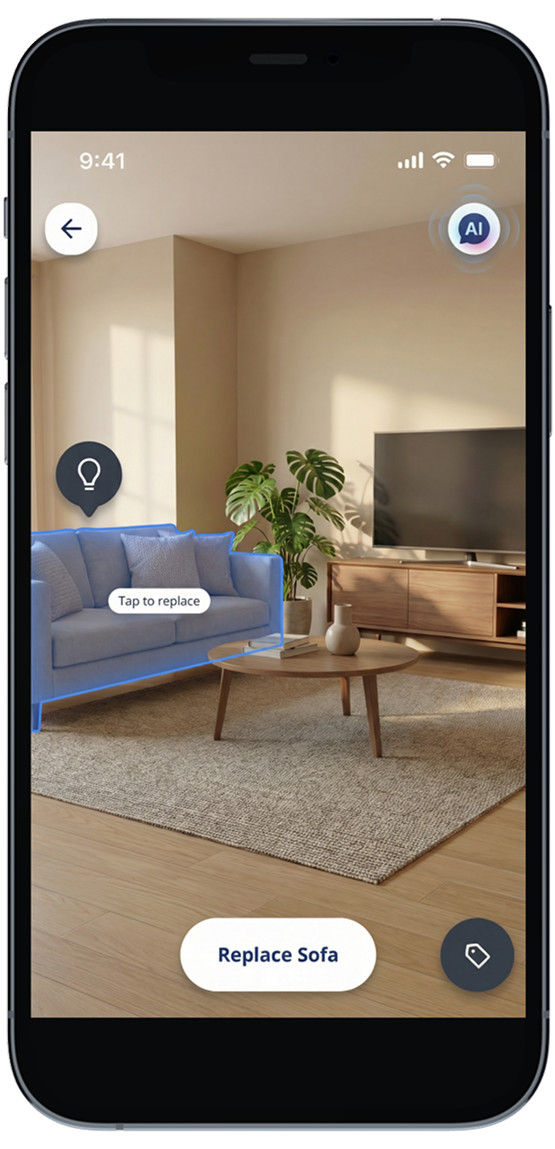
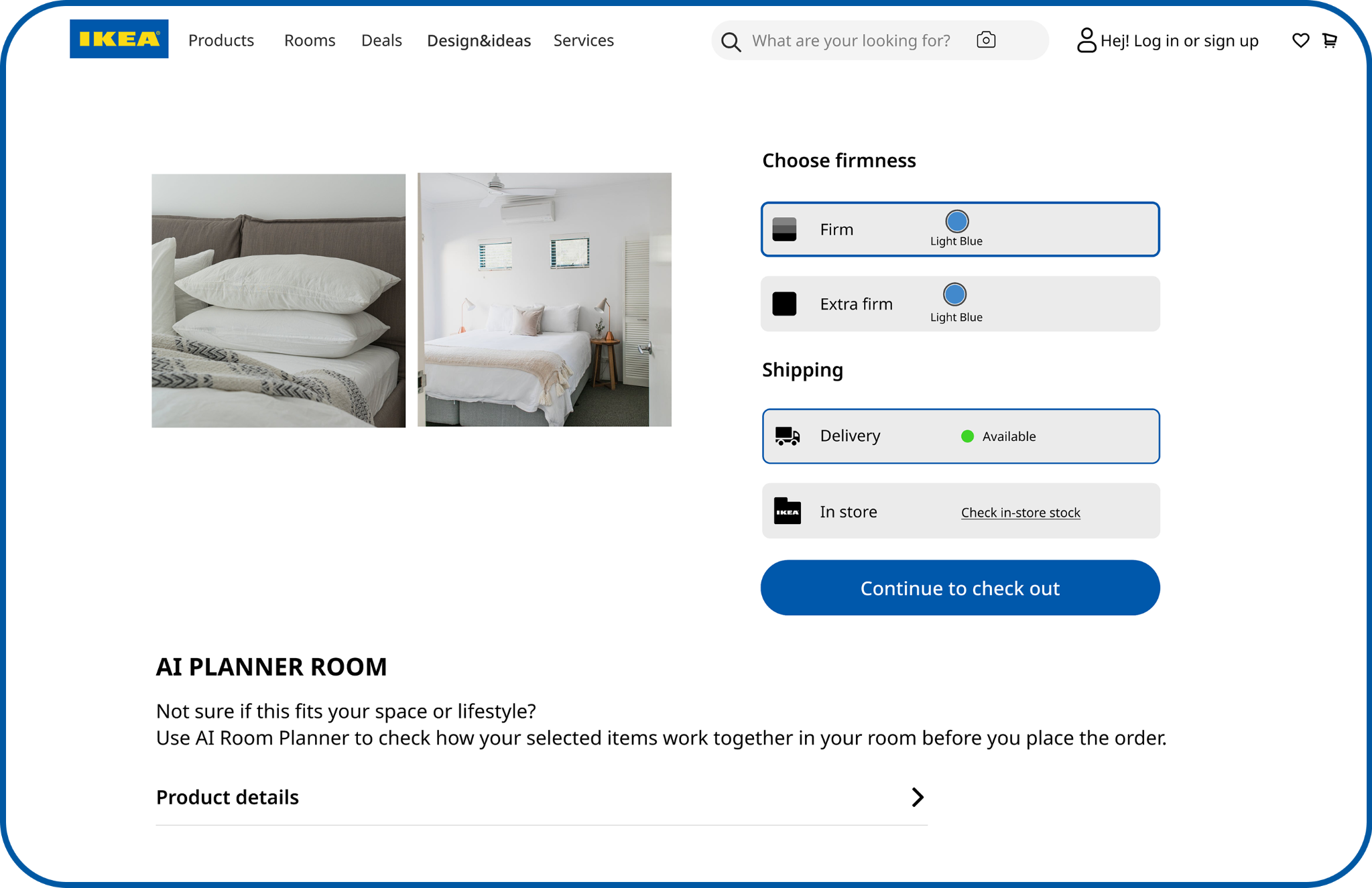
These measures outline how the concept could be evaluated in future testing.
Can users explain why their chosen layout fits their needs?
Potential measure: pre/post decision-confidence surveyDoes transparent comparison reduce repeated backtracking?
Potential measure: time to informed choiceDo shoppers use planning support at key journey moments?
Potential measure: meaningful planner engagementDoes better guidance resolve common questions without extra help?
Potential measure: assistance requests per planning sessionWhich choices and trade-offs matter in different household contexts?
Potential measure: consent-based preference patternsExploratory interviews, a review of planning tools, a decision framework and a working rule-based comparison prototype.
How accurately can the tool explain trade-offs, handle missing product data and support choices involving multiple items?
Run task-based comparisons across travel, home-office and budget scenarios; examine constraint errors, clarity and decision confidence.